


 |
| Trevi Fountain , Roma, Italy |


Skin Design: Jasmine85


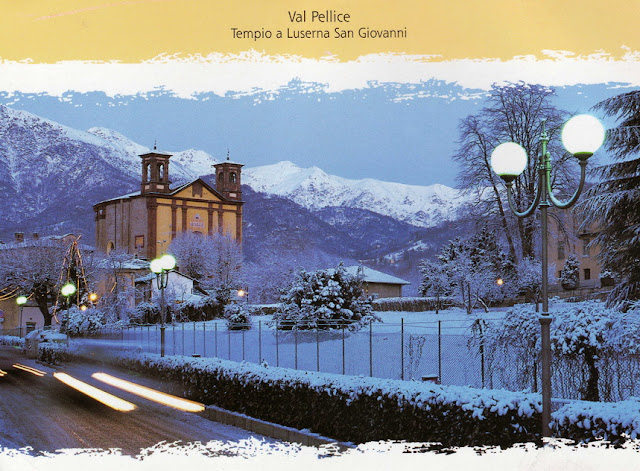

Torre Pellice is a comune (municipality) in the Province of Turin in the Italian region Piedmont, located about 45 km southwest of Turin. It is crossed by the Pellice river.
Torre Pellice is the centre of the Waldensian church. The Waldensians arrived in the valley in the early 13th century. In a grotto nearby Torre Pellice they held the Sinod of Chanforan, by which they adhered to the Protestant Reformation (1590).
It borders the following municipalities: Angrogna, Villar Pellice, Luserna San Giovanni, and Rorà.
都灵是位于意大利北部的重要城市,皮埃蒙特大区和都灵省的首府。它坐落在波河的左岸,阿尔卑斯山环绕在城市的西北。
References sources : wikipedia


Piedmont is one of the 20 regions of Italy. It has an area of 25,399 km2 and a population of about 4.4 million. The capital is Turin. The main local language is Piedmontese. Occitan is also spoken by a minority in the Occitan Valleys. Franco-Provençal is also spoken by another minority in the alpine heights of the Province of Turin. The name Piedmont comes from medieval Latin Pedemontium, i. e. "ad pedem montium", meaning "at the foot of the mountain".
皮埃蒙特 (意大利语: Piemonte)是意大利西北的一个大区。大区面积有25,399 平方公里及大约四百三十万人口。大区首府是都灵。
皮埃蒙特三面被阿尔卑斯山山脉包围,包括波河的起源维素山脉,及罗莎山脉。大区与法国、瑞士、及意大利伦巴第、利古里亚、艾米利亚-罗马涅及瓦莱达奥斯塔大区相邻。
皮埃蒙特的低地是一块农产丰足的地区,盛产小麦、稻米、玉蜀黍及葡萄。该区也是主要的工业中心,特别是都灵,是快意车厂的总部所在地。
2006年2月,都灵成功主办2006年冬季奥林匹克运动会。
References sources : wikipedia
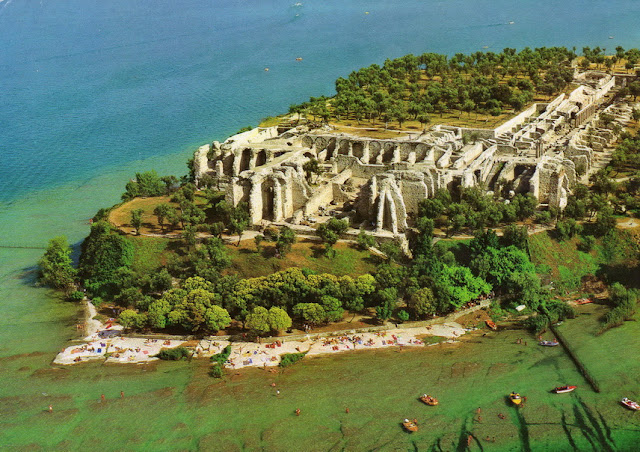


Sirmione is a comune in the province of Brescia, in Lombardy (northern Italy). It is bounded by other communes of Desenzano del Garda and Peschiera del Garda in the province of Verona and the region of Veneto. It has a historical centre which is located on a small peninsula that separates the lower part of Lake Garda.
The main historical landmark of Sirmione is the so-called Grotto of Catullus (Grotte di Catullo), the most striking example of a Roman private edifice discovered in northern Italy. The edifice had a rectangular plan and measured 167 x 105 m. The town is famous for its thermal springs.
西米欧尼Sirmione 位于意大利北部加达湖Lago di Garda 的南端。此地殘留許多13世紀的城堡和古老屋舍。
References sources : wikipedia
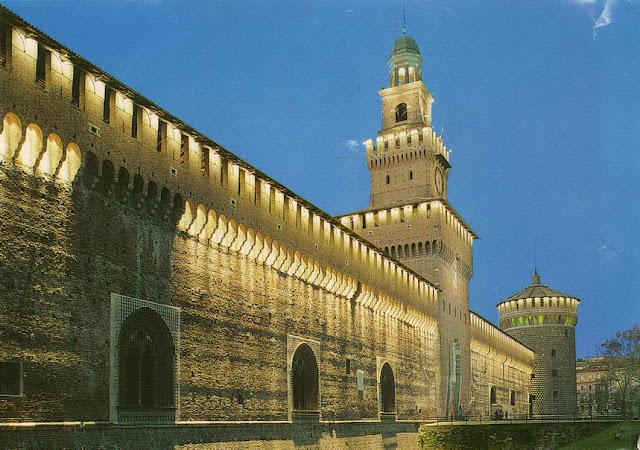
Castello Sforzesco (English: Sforza Castle) is a castle in Milan, Italy, that used to be the seat and residence of the ruling family of Milan and now houses several of the city's museums and art collections.
The original construction on the site began in the 14th century. In 1450, Francesco Sforza began reconstruction of the castle, and it was further modified by later generations. A number of these rooms originally had elaborate internal decoration - the best known of these being the Sala Delle Asse with surviving ceiling paintings by Leonardo da Vinci
After the French victory in the 1515 Battle of Marignano, the defeated Massimiliano Sforza, his Swiss mercenaries and the cardinal-bishop of Sion retreated into the Castello Sforzesco. However, King Francis I of France followed them into Milan, and his sappers placed mines under the castle's foundations, whereupon the defenders submited.
After the unification of Italy in the 19th century, the restoration of the castle was started following its transfer from military use to the city of Milan. The restoration work was directed by Luca Beltrami. The central Filarete tower above the main city entrance was rebuilt between 1900 and 1905 as a monument to King Umberto I.
The castle was severely damaged as a result of the allied bombardment of Milan in 1943 during World War II. The post-war reconstruction of the building for museum purposes was undertaken by the BBPR architectural partnership.
斯福爾扎古堡 (義大利語:Castello Sforzesco)是義大利米蘭的一座城堡,曾經是統治米蘭的斯福爾扎家族的居所,現在安置了數個博物館。
這個地點上原來的建築始建於14世紀。1450年,弗朗切斯科·斯福爾扎一世開始重建城堡,其後人進一步加以修改。許多房間原來有精美的內部裝飾 -其中最著名的是達文西所作的天花板畫Sala Delle Asse。
1515年法國在馬里尼亞諾戰役中獲勝,戰敗的馬克西米利安·斯福爾扎、他的瑞士雇傭兵和錫永樞機主教撤退回到斯福爾扎古堡。但是,法國國王弗朗索瓦一世跟著他們進入米蘭,他的工兵在城堡地下安放了地雷,於是防禦者投降。
19世紀義大利統一以後,城堡得到修復,但是不再用作軍事用途,而是移交給米蘭市。修復工作由盧卡·貝爾特拉米(Luca Beltrami)領導。主要城市入口上方的中央塔樓重建於1900年至1905年,作為國王翁貝托一世的紀念碑。
在第二次世界大戰期間的1943年,米蘭遭到盟軍轟炸,該城堡受到嚴重破壞。戰後,由BBPR建築事務所重建,作為博物館使用,包括古代藝術博物館,傢具博物館,樂器和應用藝術博物館,考古博物館埃及和史前部,不過最著名的還是Pinacoteca del Castello Sforzesco,藏品包括米開朗基羅最後的雕塑作品Rondanini Pietà和達文西的Codex Trivulzianus原稿。
References sources : wikipedia
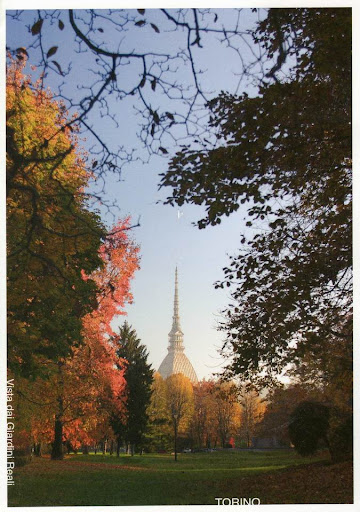
The Mole Antonelliana is a major landmark of the Italian city of Turin. It is named for the architect who built it, Alessandro Antonelli. Construction began in 1863 and was completed 26 years later, after the architect's death. Nowadays it houses the National Museum of Cinema, and it is believed to be the tallest museum in the world.
義大利杜林的標誌是安托內利尖塔,是以它的建築師亞歷山德羅· 安托內利的名字命名的。它於1863年開始建造,最初是座猶太教堂。如今,這裡是國家電影博物館所在地,是世界最高(167m或548ft)以及歐洲最大的博物館。
References sources : wikipedia
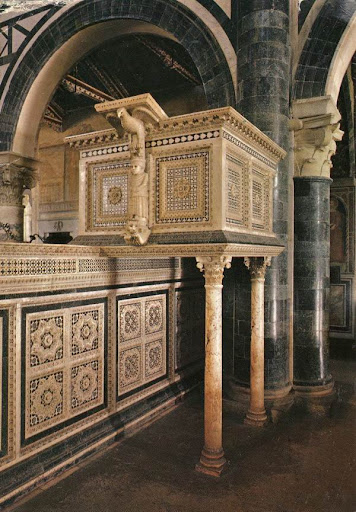


San Miniato al Monte (St. Minias on the Mountain) is a(basilica) in Florence, central Italy, standing atop one of the highest points in the city. It has been described as one of the finest Romanesque structures in Tuscany and one of the most beautiful churches in Italy.
圣米尼亚托大殿(Basilica di San Miniato al Monte),是一座罗马天主教的宗座圣殿,坐落在佛罗伦萨的制高点之一,被称为托斯卡纳最好的罗曼式建筑,以及意大利最美丽的教堂之一。
圣米尼亚托是一位在皇帝Decius时期效力于罗马军队的亚美尼亚王子,他被指控为基督徒,被带到扎营在佛罗伦萨的城门外的皇帝面前。皇帝下令将他扔在露天剧场喂野兽,但是豹拒绝吞噬他。于是在场的皇帝下令将他斩首,据称他拾起自己的头颅,渡过阿诺河,走到山上。
References sources : wikipedia
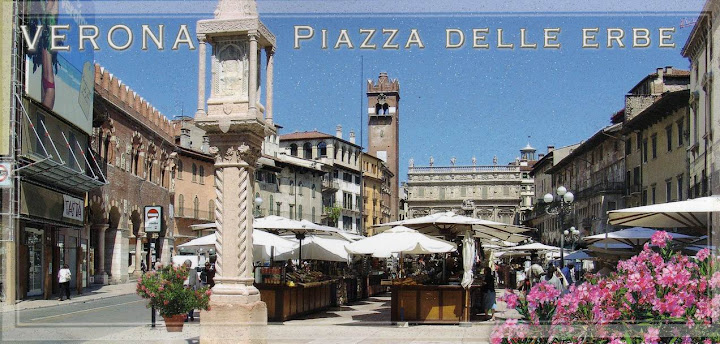

Piazza delle Erbe is a square in Verona, Italy. It once was home to the town's Roman forum during the time of the Roman Empire.
维罗纳(意大利语:Verona)是位于意大利北部威尼托大区阿迪杰河畔的一座历史悠久的城市,2000年入选联合国教科文组织的世界遗产。
香草广场(Piazza delle Erbe)位于维罗纳市区北部,据说这里在罗马时代被称作弗洛·罗马诺,是市民进行仲裁、政治集会的公共场所。现在,各式各样的水果、蔬菜、花卉商铺覆盖了整个广场,看上去更象是一个大集市,广场中央有建于14世纪、名为“维罗纳的爱人”的喷泉,广场周围的建筑物都是从中世纪到文艺复兴时期的豪华别致的楼堂馆所。
References sources : wikipedia,it.veduchina.com



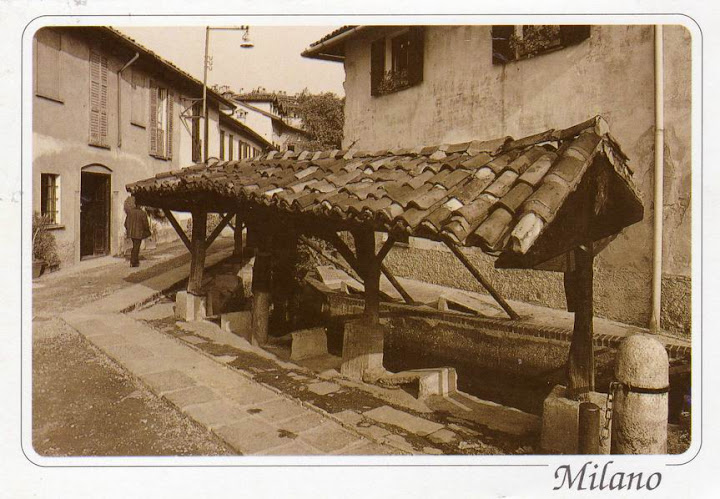
The “Navigli” formed until the 19th century the city’s port district. Work on the Naviglio Grande started in 1177. A sequence of locks allowed boats to travel along the canals on different levels. Lodovico il Moro with Leonardo da Vinci improved this network in the 15th century. Thanks to the Navigli canals, in 1953 landlocked Milan was ranked the 13th port in Italy. Today, the area around the Navigli, is one of liveliest of Milan: here you’ll find many interesting shops, restaurants and markets. During the day the area around the Navigli is peaceful, with a village atmosphere. Walking back towards the dockyard (the Darsena) there is a good view of the pretty Vicolo dei Lavandai (Washers’ Alley) from the opposite side of the canal. In the past women would wash their clothes in the pool fed by the Naviglio Grande.
Navigli運河區,在米蘭市南方的古老區域,在这里有很多著名的艺术工坊和各式著名的餐厅,是許多時裝展的舉辦地點,也是米蘭人的晚飯夜生活重鎮。达芬奇曾于1482至1499年期间在米兰生活,他的生活印迹至今还清晰可见,一直到1930年还流经米兰的古老运河上的水闸就是由这位大师设计的。
References sources : www.nycemilan.com


 Postcards received from


