


 |
| Phra Si Sakyamuni, Buddha-Sta |


Skin Design: Jasmine85


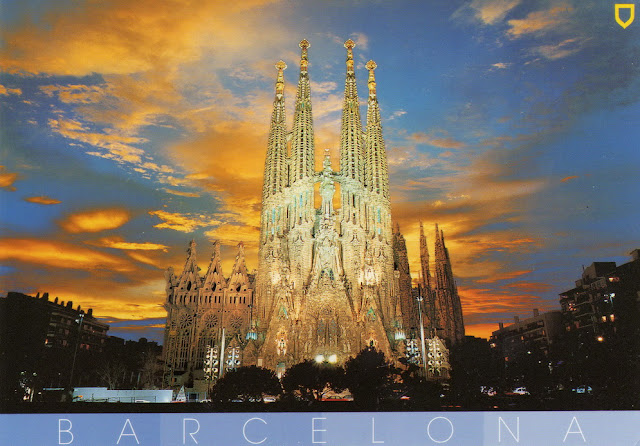

The Temple Expiatori de la Sagrada Família (official Catalan name; Spanish: Templo Expiatorio de la Sagrada Familia; "Expiatory Church of the Holy Family"), often simply called the Sagrada Família, is a massive, privately-funded Roman Catholic church that has been under construction in Barcelona, Catalonia, Spain since 1882 and is not expected to be complete until at least 2026. A portion of the building's interior is scheduled to open for public worship and tours by September 2010.
Considered the master-work of renowned Catalan architect Antoni Gaudí (1852–1926), the project's vast scale and idiosyncratic design have made it one of Barcelona's (and Spain's) top tourist attractions for many years. The church is to be consecrated by Pope Benedict XVI on November 7, 2010, during his visit to Santiago de Compostela and Barcelona.
神聖家族教堂(簡稱聖家堂,全名神聖家族贖罪教堂 - Temple Expiatori de la Sagrada Família)是西班牙巴塞羅那的一個教堂,從1882年修建,因為是贖罪教堂,資金的來源主要靠捐款,捐款的多少直接影響到工程進度的快慢,所以至今還未完工,是世界上唯一一個,還未完工就被列為世界遺產的建築物。這個教堂不是大主教做弥撒的地方,所以不是大教堂,只是個設計特別的教堂而已,而且,雖然已建了126年還未完工,但和德國耗時600年才建好的科隆大教堂比起來,根本算不上「世界上耗時最長的工程」。
神聖家族教堂的建築屬於西班牙「加泰隆現代主義Catalan Modernisme」(屬於新藝術運動,與二十世紀初的現代主義Modernism並不相同)建築,1882年動工時,由Josep Maria Bocabella領導的Asociación Josefina y del Templo宗教團體出錢,由建築師Francesc de Paula del Villar開始興建,一年後,建築師Francesc de Paula del Villar因設計的教堂成本太高,和宗教團體意見不合,辭職而去,才由年僅31歲的安東尼·高第接手。高第接手後,聖壇地下室已在建造中,無法修改設計圖,所以他按照第一任建築師Francesc de Paula del Villar的設計圖建完聖壇地下室,然後把整個教堂重新設計,把Francesc de Paula del Villar原先設計的新哥德式教堂改為加泰隆現代主義建築。高第一生43年的心血都花在這個教堂的設計上,1925年後還乾脆搬到教堂的工地去住,全心全意設計教堂,直到1926年他遇車禍死亡為止,一直不斷的研究教堂的結構設計,去世時留下了許多寶貴的資料、設計稿和模型,但是在西班牙內戰時被毀壞,而工程也停頓到1954年才再次動工。
這個教堂的設計帶有強烈的自然色彩,高第以很多動植物的形態為藍本來設計教堂,更以《聖經》中的各個場景在整個建築中如同圖畫一樣逐幅展現,使這個教堂成為每個來訪者都可以讀到的一本教義問答書。
這個教堂有東、西、南三個門面:「誕生門面」、「受難門面」和「榮耀門面」。每個門面都會建有四座鐘塔,共計十二座,分別代表耶穌的十二個門徒。除此之外,建築的中央另有六座高塔,其中四座代表聖經四福音作者,馬太、馬可、路加以及約翰,一座代表聖母瑪利亞,一座代表耶穌基督。所以整個聖家堂的設計當中總共將建造十八座高塔。代表門徒的十二座高塔的高度介於98.4米 和117米,代表福音作者的四座高塔高達120米,代表聖母瑪利亞的高塔高達120米,代表耶穌基督的高塔高達170米。
大部分的設計都未在高第生前真正建成。聖壇地下室建於1889 - 1892年,「誕生門面」建於1892 - 1930年,高第去世於1926年,「受難門面」建於1954 - 1977年,偏殿和中殿建於1978 - 2000年,「榮耀門面」還在建造當中,教堂中間的六座高塔還沒開始建造。
現在已建好、可以參觀的是「誕生門面」和「受難門面」。「誕生門面」以基督的誕生為題,牆上的雕塑展現了由童貞瑪利亞懷胎到基督長成的故事,因是歡迎慶祝基督誕生,以歡喜愉悅的雕塑為主。「受難門面」以基督的死亡為題,高第為了表現受難的痛苦,設計了有棱有角的現代線條,雕刻家Josep M. Subirachs按照高第留下的圖稿刻出了由最後的晚餐到基督被釘十架,到基督升天的故事。
從高第以後,現在的建築師Jordi Bonet已是第四代了,目前,三個門面已建好「誕生門面」和「受難門面」,十八座高塔已建好「誕生門面」的四座鐘塔和「受難門面」的四座鐘塔,還差十座高塔,整個建築完成了將近50%,預計還要二、三十年才會完工。
References sources : wikipedia
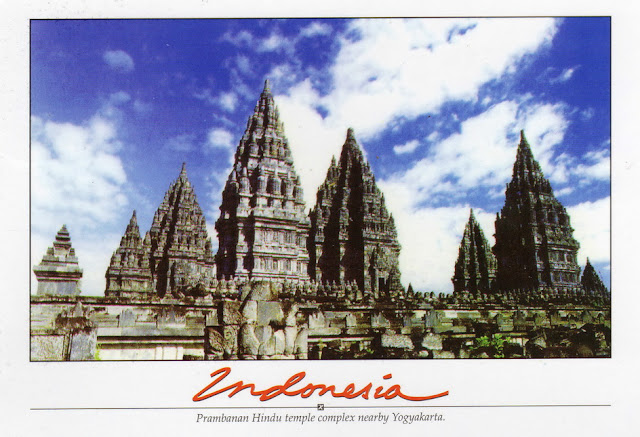

Prambanan is the ninth century Hindu temple compound in Central Java, Indonesia, dedicated to Trimurti, the expression of God as the Creator (Brahma), the Sustainer (Vishnu) and the Destroyer (Shiva). The temple compound located approximately 18 km east of Yogyakarta city on the boundary between Yogyakarta and Central Java province.
The temple is a UNESCO World Heritage Site, currently is the largest Hindu temple in Indonesia, and is one of the largest Hindu temples in south-east Asia. It is characterised by its tall and pointed architecture, typical of Hindu temple architecture, and by the towering 47m high central building inside a large complex of individual temples.
巴兰班南位于东爪哇,离日惹市约18公里,是印度尼西亚最大的印度教建筑。
巴兰班南大约建造于公元850年。它的建造者可能是马塔兰王朝的第二个国王,或者三佛齐王朝的 Balitung Maha Sambu。巴兰班南建成后很快就被遗弃并开始破败。其重建始于1918年。1953年前后人们完成了对其主建筑的重建。该建筑的很多原始石材时常被盗用于远处的建筑。根据原物归位的原则,重建必须保证75%的原始材料可用,因此巴兰班南的多数小神庙只剩下地基和危墙,而未被列入重建计划。
今天巴兰班南是联合国教科文组织的一处世界文化遗产,也是东南亚最大的印度教庙宇。它的独特之处在于其高耸的尖顶建筑、印度教建筑的典型风格和高达47米的中心建筑。
巴兰班南在2006年的爪哇地震中受到了严重的损毁。尽管建筑整体完好,但是大块的石料破碎,包括一些石雕都被震落在地上。当地政府一度关闭巴兰班南以评估地震的破坏。日惹古迹保护局称需要数月才能准确评估。不过数周之后巴兰班南就再次对游客开放,只是出于安全限制游人靠近建筑。
References sources : wikipedia
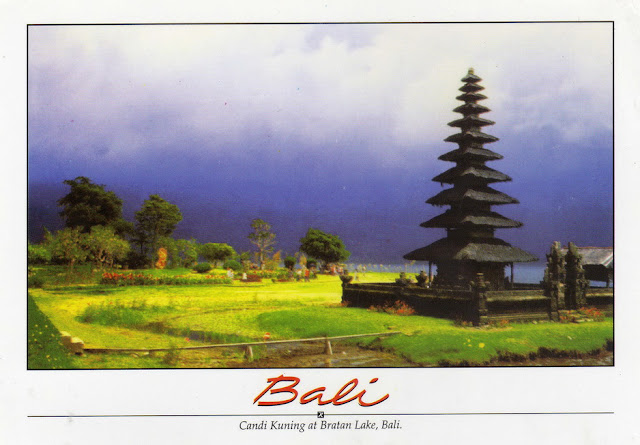

Bratan or Catur or Tjatur contains three caldera lakes at the north of Bali island. The volcanic complex covers 11 × 6 km wide area. The largest post-caldera cone within the complex is Gunung Batukaru.
峇里島(印尼语:Bali)也稱「峇里省」,是印度尼西亚33個一級行政區之一,也是著名的旅游胜地。該島距離印尼首都雅加达約1000多公里,与爪哇岛之間僅有3.2公里寬海峽相隔,面积约5630多平方公里,人口约315万。峇里省省會設於島上南部的丹帕沙。
References sources : wikipedia
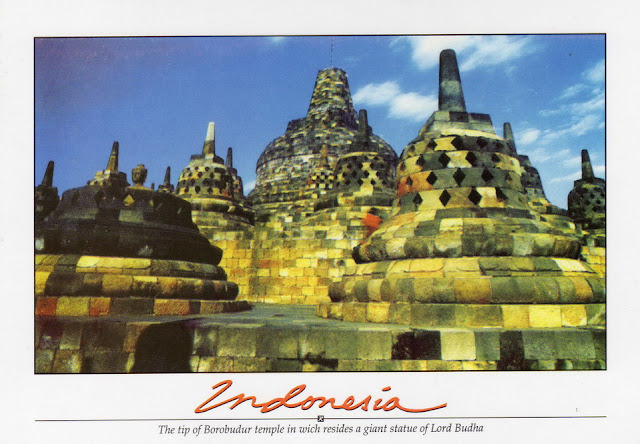

Borobudur is a ninth-century Mahayana Buddhist monument in Magelang, Central Java, Indonesia. The monument comprises six square platforms topped by three circular platforms, and is decorated with 2,672 relief panels and 504 Buddha statues. A main dome, located at the center of the top platform, is surrounded by 72 Buddha statues seated inside perforated stupa.
The monument is both a shrine to the Lord Buddha and a place for Buddhist pilgrimage. The journey for pilgrims begins at the base of the monument and follows a path circumambulating the monument while ascending to the top through the three levels of Buddhist cosmology, namely Kāmadhātu (the world of desire), Rupadhatu (the world of forms) and Arupadhatu (the world of formlessness). During the journey the monument guides the pilgrims through a system of stairways and corridors with 1,460 narrative relief panels on the wall and the balustrades.
Evidence suggests Borobudur was abandoned following the fourteenth century decline of Buddhist and Hindu kingdoms in Java, and the Javanese conversion to Islam. Worldwide knowledge of its existence was sparked in 1814 by Sir Thomas Stamford Raffles, the then British ruler of Java, who was advised of its location by native Indonesians. Borobudur has since been preserved through several restorations. The largest restoration project was undertaken between 1975 and 1982 by the Indonesian government and UNESCO, following which the monument was listed as a UNESCO World Heritage Site. Borobudur is still used for pilgrimage; once a year Buddhists in Indonesia celebrate Vesak at the monument, and Borobudur is Indonesia's single most visited tourist attraction.
婆羅浮屠是一座位於印度尼西亞中爪哇省的一座大乘佛教佛塔遺跡,距離日惹市西北40公里,是9世紀當時世上最大型的佛教建築物。
婆羅浮屠大約於公元842年間,由當時統治爪哇島的夏连特拉王朝統治者興建。「婆羅浮屠」這個名字的意思很可能來自梵語「Vihara Buddha Ur」,意思就是「山頂的佛寺」。後來因為火山爆發,使這佛塔群下沉、並隱蓋於茂密的熱帶叢林中近千年,直到19世紀初才被清理出來,与中国的长城、埃及的金字塔和柬埔寨的吴哥窟并稱為古代東方四大奇蹟。
References sources : wikipedia
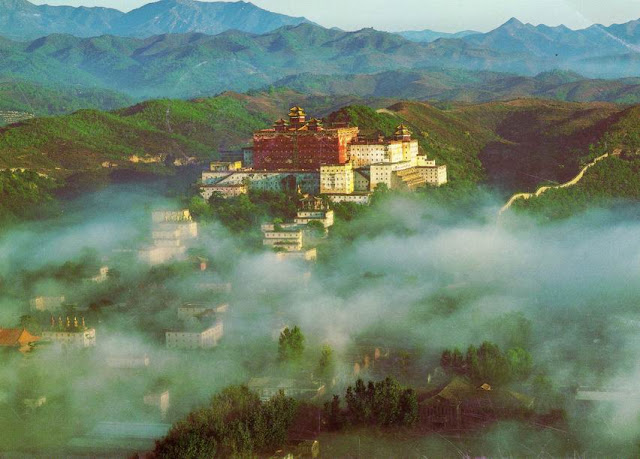


The Putuo Zongcheng Temple (Chinese: 普陀宗乘之庙) of Chengde, Hebei province, China is a Qing Dynasty era Buddhist temple complex built between 1767 and 1771,during the reign of the Qianlong Emperor (1735-1796). It is located near the Chengde Mountain Resort, which is south of the Putuo Zongcheng. Along with the equally famed Puning Temple, it is one of the Eight Outer Temples of Chengde. The temple was modeled after the Potala Palace of Tibet, the old sanctuary of the Dalai Lama built a century earlier. Hence the Putuo Zongcheng has been nicknamed the "Little Potala Palace". Since it was modeled after the Potala palace, the temple represents a fusion of Chinese and Tibetan architectural styles. The temple complex covers a surface area of some 220,000 square meters, making it one of the largest in China. Many of its halls and pavilions are adorned with copper and gold tiled roofs, adding to the splendor of the site.
普陀宗乘之庙在1961年登录全国重点文物保护单位 ,在1994年登录世界文化遗产。普陀宗乘之庙位于河北省承德市避暑山庄附近,始建于乾隆三十二年(1767年)三月,于乾隆三十六年(1771年)八月竣工。这座庙宇是乾隆为了母亲皇太后80寿辰而建的,乾隆在庙中立御制碑《普陀宗乘之庙碑》纪念。普陀宗乘之庙是外八庙中最辉煌、规模最大的一个庙。因为这座庙宇是仿照西藏拉萨的布达拉宫而建,因而又称为“小布达拉宫”,“普陀宗乘”乃藏语布达拉的音译。
References sources : wikipedia
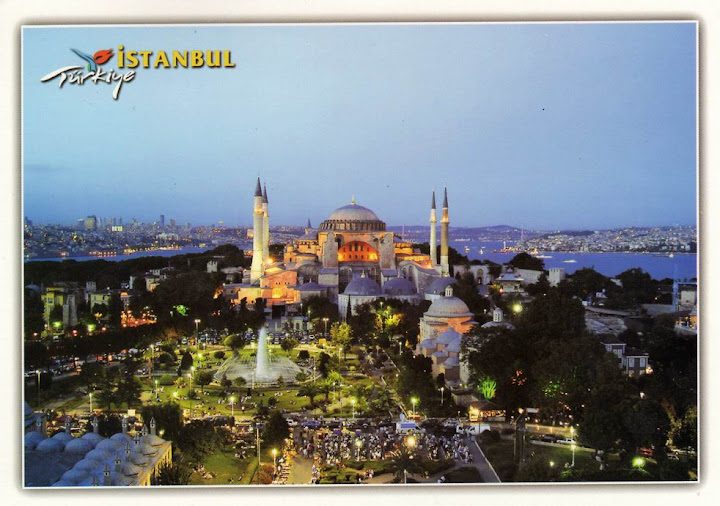

Hagia Sophia is a former patriarchal basilica, later a mosque, now a museum in Istanbul, Turkey. Famous in particular for its massive dome, it is considered the epitome of Byzantine architecture and to have "changed the history of architecture." It was the largest cathedral in the world for nearly a thousand years, until the completion of the Seville Cathedral in 1520. The current building was originally constructed as a church between 532 and 537 A.D. on the orders of the Byzantine Emperor Justinian, and was in fact the third Church of the Holy Wisdom to occupy the site (the previous two had both been destroyed by riots). It was designed by two architects, Isidore of Miletus and Anthemius of Tralles. The Church contained a large collection of holy relics and featured, among other things, a 15m (49 foot) silver iconostasis. It was the patriarchal church of the Patriarch of Constantinople and the religious focal point of the Eastern Orthodox Church for nearly one thousand years.
In 1453, Constantinople was conquered by the Ottoman Turks and Sultan Mehmed II ordered the building to be converted into a mosque. The bells, altar, iconostasis, and sacrificial vessels were removed, and many of the mosaics were eventually plastered over. The Islamic features — such as the mihrab, the minbar, and the four minarets outside — were added over the course of its history under the Ottomans. It remained as a mosque until 1935, when it was converted into a museum by the Republic of Turkey.
For almost 500 years the principal mosque of Istanbul, Hagia Sophia served as a model for many of the Ottoman mosques such as the Sultan Ahmed Mosque (Blue Mosque of Istanbul), the Şehzade Mosque, the Süleymaniye Mosque, the Rüstem Pasha Mosque, and the Kılıç Ali Paşa Mosque.
Although it is sometimes referred to as Santa Sophia, the Greek name in full is Ναός τῆς Ἁγίας τοῦ Θεοῦ Σοφίας, Church of the Holy Wisdom of God. It was to this, the Holy Wisdom of God, that the Church was dedicated ("Sophia" being the phonetic spelling in Latin of the Greek word for wisdom). So Santa Sophia should be understood as the italianate title of the church, Holy Wisdom; not as a reference to some saint named Sophia.
圣索菲亚大教堂(Hagia Sophia)或者译作哈吉亚·索非亚教堂位于土耳其伊斯坦布尔,是一座拜占庭式的教堂。335年由君士坦丁大帝首建,532年查士丁尼一世续建。1453年被奥斯曼帝国占领,被改建成为伊斯兰教的清真寺。現為博物館。
现存的建筑是拜占庭式建筑的代表作,它的突出成就在于创造了以帆拱上的穹顶为中心的复杂拱券结构平衡体系。
References sources : wikipedia
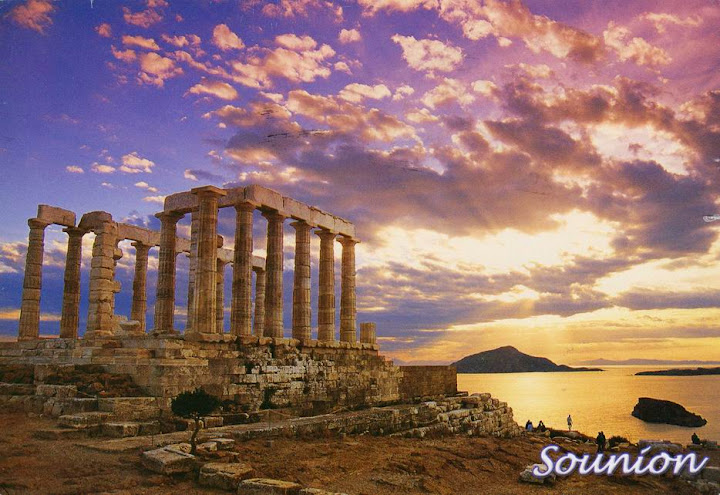


Cape Sounion is a promontory located 69 km SSE of Athens, at the southernmost tip of the Attica peninsula in Greece.
Cape Sounion is noted as the site of ruins of an ancient Greek temple of Poseidon, the god of the sea in classical mythology. The remains are perched on the headland, surrounded on three sides by the sea. The ruins bear the deeply engraved name of English Romantic poet Lord Byron (1788 - 1824).
The site is a popular day-excursion for tourists from Athens, with sunset over the Aegean Sea, as viewed from the ruins, a sought-after spectacle.
舒尼恩半岛(Sounion)的大理石神殿:为侧有13根,前后各6根多里斯式列柱的海神波塞冬神殿 (Poseidon)。这是公元前5世纪古希腊人为纪念海神波塞冬而兴建,是唯一矗立于爱琴海边的神殿。
References sources : wikipedia






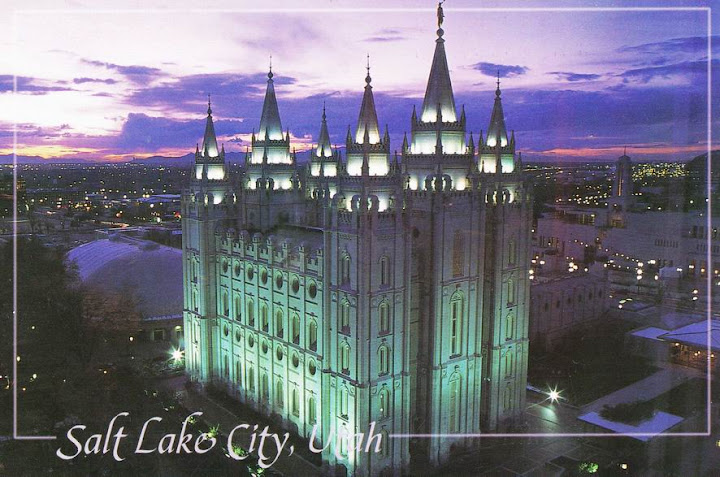

The Salt Lake Temple is the largest (of more than 120 around the world) and best-known temple of The Church of Jesus Christ of Latter-day Saints. It is the sixth temple built by the church overall, and the fourth operating temple built since the Mormon exodus from Nauvoo, Illinois.
The Salt Lake Temple is the centerpiece of the 10 acre (40,000 m²) Temple Square in Salt Lake City, Utah. Although there are no public tours inside the temple (because it is considered sacred by the church and its members, a temple recommend is required), the temple grounds are open to the public and are a popular tourist attraction. Due to its location at LDS Church headquarters and its historical significance, it is patronized much by Latter-day Saints from many parts of the world.
The Salt Lake Temple is also the location of the weekly meetings of the First Presidency and the Quorum of the Twelve Apostles.As such, there are special meeting rooms in the Salt Lake Temple for these purposes, including the Holy of Holies, which are not present in other temples.
The official name of the Salt Lake Temple is also unique. In the early 2000s, as the building of LDS temples accelerated dramatically, the Church announced a formal naming convention for all existing and future temples. For temples located in the United States and Canada, the name of the temple is generally the city or town in which the temple is located, followed by the name of the applicable state or province (with no comma). For temples outside of the U.S. and Canada, the name of the temple is generally the city name (as above) followed by the name of the country. However, for reasons on which the Church did not elaborate (possibly due to the historical significance and worldwide prominence of the temple), the Salt Lake Temple was granted an exception to the new rule and thus avoided being renamed the Salt Lake City Utah Temple.
Temple Square is a ten acre (40,000 m²) complex located in Salt Lake City, Utah, owned by The Church of Jesus Christ of Latter-day Saints (the Mormon or LDS Church). In recent years, the usage of the name has gradually changed to include several other church facilities immediately adjacent to Temple Square. Contained within Temple Square proper are the Salt Lake Temple, Salt Lake Tabernacle, Salt Lake Assembly Hall, the Seagull Monument and two visitors' centers.
盐湖城(Salt Lake City,S.L.C.),是美国犹他州的首府和最大城市,市内人口181,743(2000年),大都市区人口为1,018,826人,名列美国西部内陆城市的第三位,仅次于丹佛和菲尼克斯。如果包括了萨米特县及图埃勒县总人口达1,018,826人。盐湖城位于一个更大的市区称为Wasatch Front,以及在2003年为止Ogden-Clearfield都会区是盐湖城的一部份。[2]在Wasatch Front总人口数目达2,150,000。城市位于一个山谷的北端,海拔1,320 m。周围的高山海拔达到3,582 m。以紧靠大盐湖而得名。
盐湖城是1847年由杨百翰率领一批耶稣基督后期圣徒教会(摩门教)的信徒在此拓荒所建成的一座城市。此后,该教会的总会一直位于盐湖城。目前超过半数的当地人士为该教会教徒。
采矿业和第一条横贯铁路的兴建带来了该市的经济繁荣,该市获得了“西部十字路口”的绰号。进入21世纪,该市大力发展户外活动旅游(包括滑雪和自行车),,并且举办了2002年冬季奥运会。
城市以工业为主,电子产业和生物技术也相当发达。
盐湖城都市区是美国的金融中心,商业中心along the rapidly-growing Wasatch Front, 以及是渡假胜地、其他小镇及国家公园的入口,包括犹他公园城、Snowbird滑雪渡假村及Arches国家公园。
犹他州最著名和最热闹的旅游景点就是盐湖城的圣殿广场。它与其他多个旅游景点毗邻,整个景区连成一片,占据城区中心地段的三个街区,却囊括了近二十个与摩门教先驱历史和族谱相关联的景点:包括盐湖教堂,大礼拜堂,家谱图书馆等等。
References sources : Wikipedia


 Postcards received from


